
Machine Elements
Learning Objective: Identify various machine elements, describe their function, and include them in the construction of simple and complex machines.
Fasteners
A fastener is a machine element that joins or affixes two or more objects together.
Types of Fasteners
ScrewsNails
Screws
NOTE: We are talking here about screws as a physical machine element, rather than a theoretical simple machine screw.
Contrary to Nails which rely solely on friction to fasten two pieces together, screws use the mechanical advantage provided by their threading.
They come in a wide variety types and sizes. Which you choose varies drastically depending
Bolts
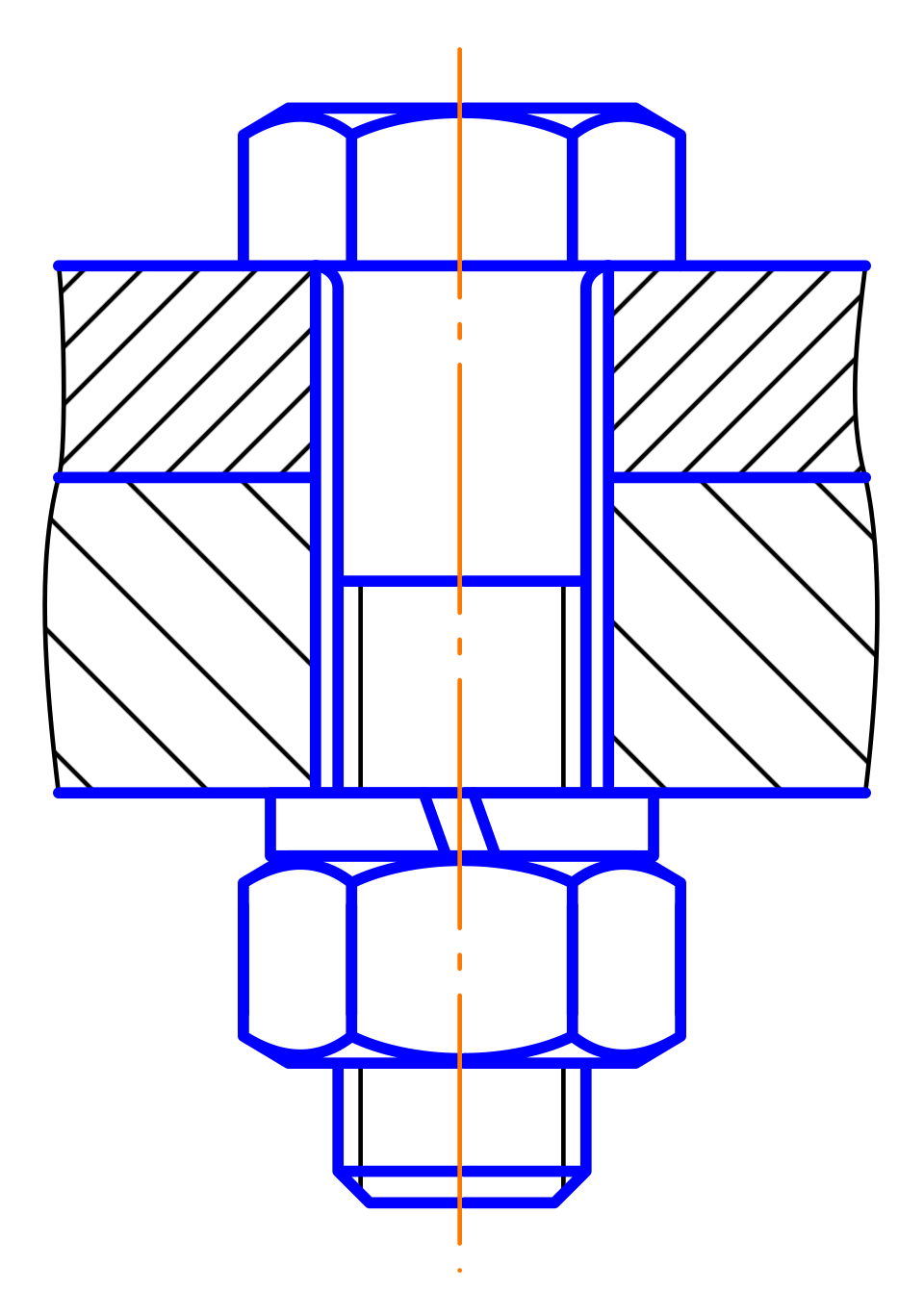 Bolts are
Screws fasten objects together on their own.
Bolts fasten objects together with the help of a nut on the other side.
The Machinery's Handbook describes the distinction between bolts and screws in more detail:
A bolt is an externally threaded fastener designed for insertion through holes in assembled parts, and is normally intended to be tightened or released by torquing a nut. A screw is an externally threaded fastener capable of being inserted into holes in assembled parts, of mating with a preformed internal thread or forming its own thread, and of being tightened or released by torquing the head. An externally threaded fastener which is prevented from being turned during assembly and which can be tightened or released only by torquing a nut is a bolt. (Example: round head bolts, track bolts, plow bolts.) An externally threaded fastener that has thread form which prohibits assembly with a nut having a straight thread of multiple pitch length is a screw. (Example: wood screws, tapping screws.)[60]
Nuts
When combined with a Bolt,
Shafts
Bearings
A bearing is a machine element