Mechanical Energy
Energy is something that is found all over the physical and life sciences. Thermal Energy is what you experience when you burn your hand on the stove (again). Chemical Energy is what causes that (safely contained) explosion in chemistry class. In this section, we will focus solely on mechanical energy, or energy due to the movement (or potential movement) of an object.
Types of Mechanical Energy
Kinetic
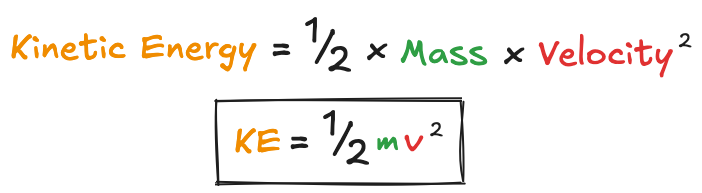
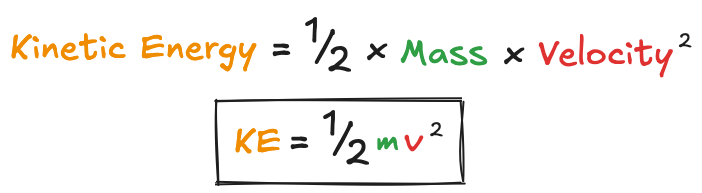
Kinetic energy is the amount of energy an object has due to its movement (velocity).
 Example
Mr. Box, who has a mass of 10 kilograms (kg), is sliding on a patch of ice at 2 meters per second (m/s) of velocity. How much kinetic energy would he have?
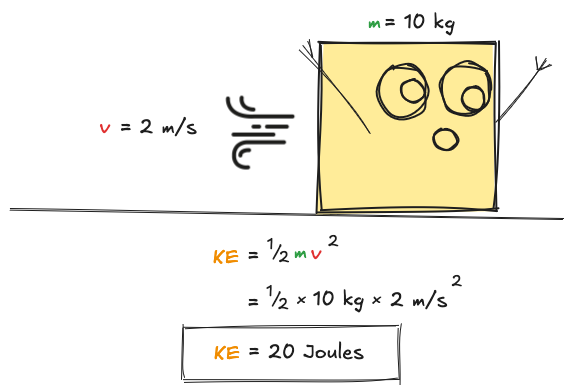
Mr. Box would have 20 Joules of Kinetic Energy.
Potential
Potential energy is the energy of an object or system due to its position relative to other objects.
Gravitational
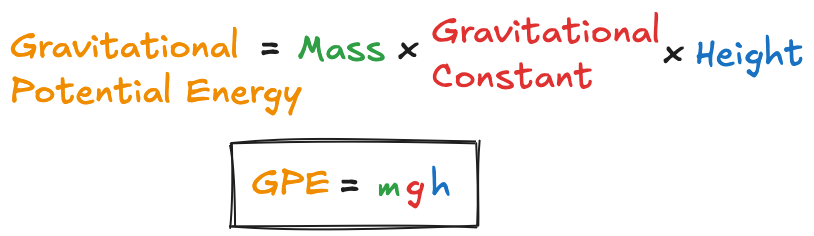
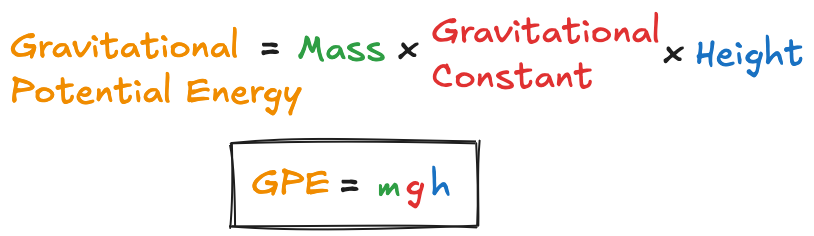
Gravitational potential energy is calculated using an object's position within a gravitational field. Typically, this is considered to be the height (h) above the surface of the earth, which provides a constant gravitational acceleration (g) of around 9.8 meters per second squared.
 Example
Mr. Box, who has a mass of 10 kg, is lifted 5 meters into the air above the surface of the Earth, which provides a gravitational acceleration of 9.8 meters per second squared. How much gravitational potential energy would Mr. Box have?
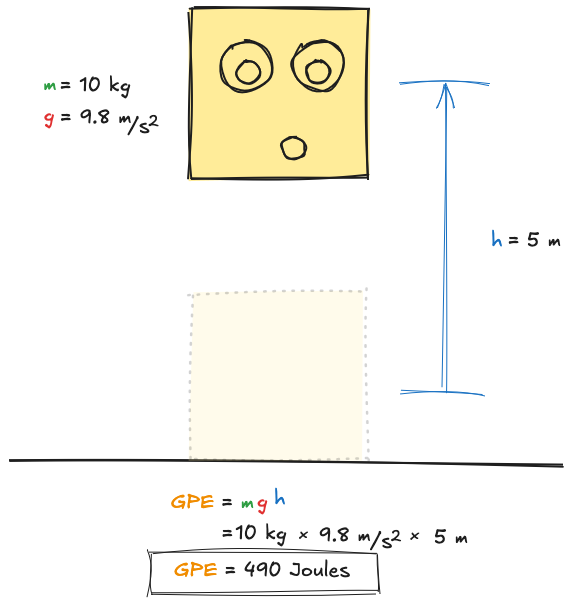
Mr. Box would have 490 Joules of gravitational potential energy.
Elastic Potential
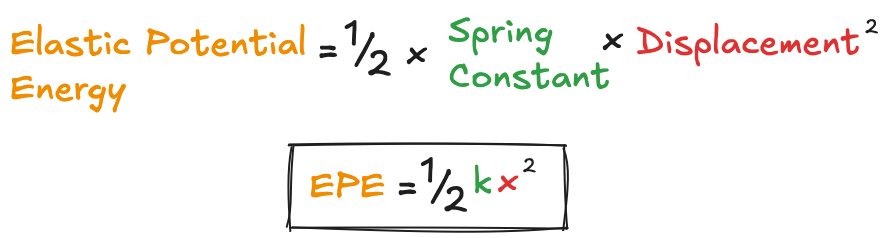
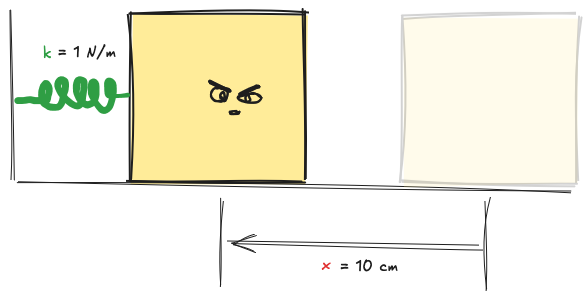
Although similar to gravitational potential energy, elastic potential energy instead deals with the energy provided by a spring (or elastic) rather than gravity. A spring's constant (k), also known as "stiffness", is determined by its shape and material.
Example
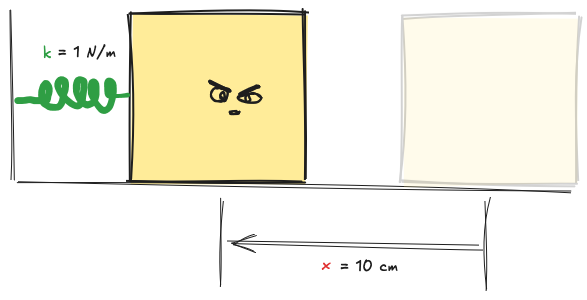
Mr. Box (mass of 10 kg) is pressed against a spring with a spring constant of 1 N/m for 10 centimeters (or 0.1 meters). How much elastic potential energy does Mr. Box now have?
 Conservation of Energy